

Transportation and logistics organizations cannot function without reliable data. Tire pressure, temperature in the refrigerated trailer, a container’s location, the driver’s driving behavior: logistics IoT sensors provide the insights on which planners and management base their decisions. But these sensors operate under various conditions that are not always ideal. They’re mounted on trailers traveling through tunnels, on containers that are on the road for weeks at a time, and on other equipment without a constant power supply. It’s precisely in these situations that they must continue to deliver reliable data, and a robust fleet management platform is essential to keep everything running smoothly.
When designing a fleet management platform, you must assume that connectivity and power aren’t always available. Vehicles travel through areas without coverage, sensors run on battery power for years, and the volume of data is growing faster than many systems can handle. Smart sensors can handle this challenge, but the data they generate only becomes valuable when it works in tandem with a platform that can optimally support all processes. That synergy determines whether you can truly rely on your operational data.
Why IoT data is the foundation of modern logistics
Data-driven operations are no longer a luxury in logistics, but a prerequisite for remaining competitive. Sensors provide real-time visibility into the location of vehicles and cargo, their condition, and the efficiency of the fleet’s deployment.
These insights translate directly into business value. By recording temperature data from refrigerated trailers, you demonstrate compliance with laws and regulations and prevent rejected shipments. Location and status data enable an accurate ETA (Estimated Time of Arrival) and enhance transparency for customers. Data on driving behavior and vehicle wear and tear lays the foundation for predictive maintenance, allowing you to stay ahead of downtime rather than reacting to it. The value of a fleet management platform therefore stands or falls on the quality and reliability of the underlying data.

The reality on the road: no connection and limited power
In practice, sensors face two structural limitations that are more pronounced in transportation than in virtually any other sector.
The first limitation is connectivity. A fleet is constantly moving through areas with variable or no coverage: tunnels, remote routes, border crossings with roaming interruptions, and underground loading and unloading areas. If a sensor is designed assuming a continuous connection, data is lost during those moments.
The second limitation is power. Many sensors on trailers, containers, and loading equipment do not have a fixed power supply and run on a battery that must last for years. Replacing batteries en masse across an entire fleet is costly and labor-intensive, so every milliwatt counts.
The real challenge lies in the combination of these factors. The moments when a sensor goes offline or needs to conserve power often coincide with precisely the situations in which something goes wrong. A temperature exceedance in an area without connectivity is a blind spot that will cost you dearly in the long run.
How sensors handle a lost connection
A reliable sensor does not depend on a continuous connection. The difference lies in how intelligently it handles moments when the network goes down.
The foundation is local processing at the edge of the network, also known as edge processing. Instead of forwarding everything immediately, the sensor or a gateway close to the source performs logic processing right there. Measurements are stored locally and sent only once connectivity is restored. This “store-and-forward” principle ensures there are no gaps in your data, even if the information arrives with a delay.
Crucially, each measurement is time-stamped at the source. This ensures the data remains usable, even if it doesn’t reach the platform until hours later. Furthermore, instead of a constant stream of data, a well-designed logistics IoT sensor primarily transmits meaningful events: an anomaly, a threshold being exceeded, or a status change. The result is a complete picture without blind spots, even if the connection was temporarily lost.
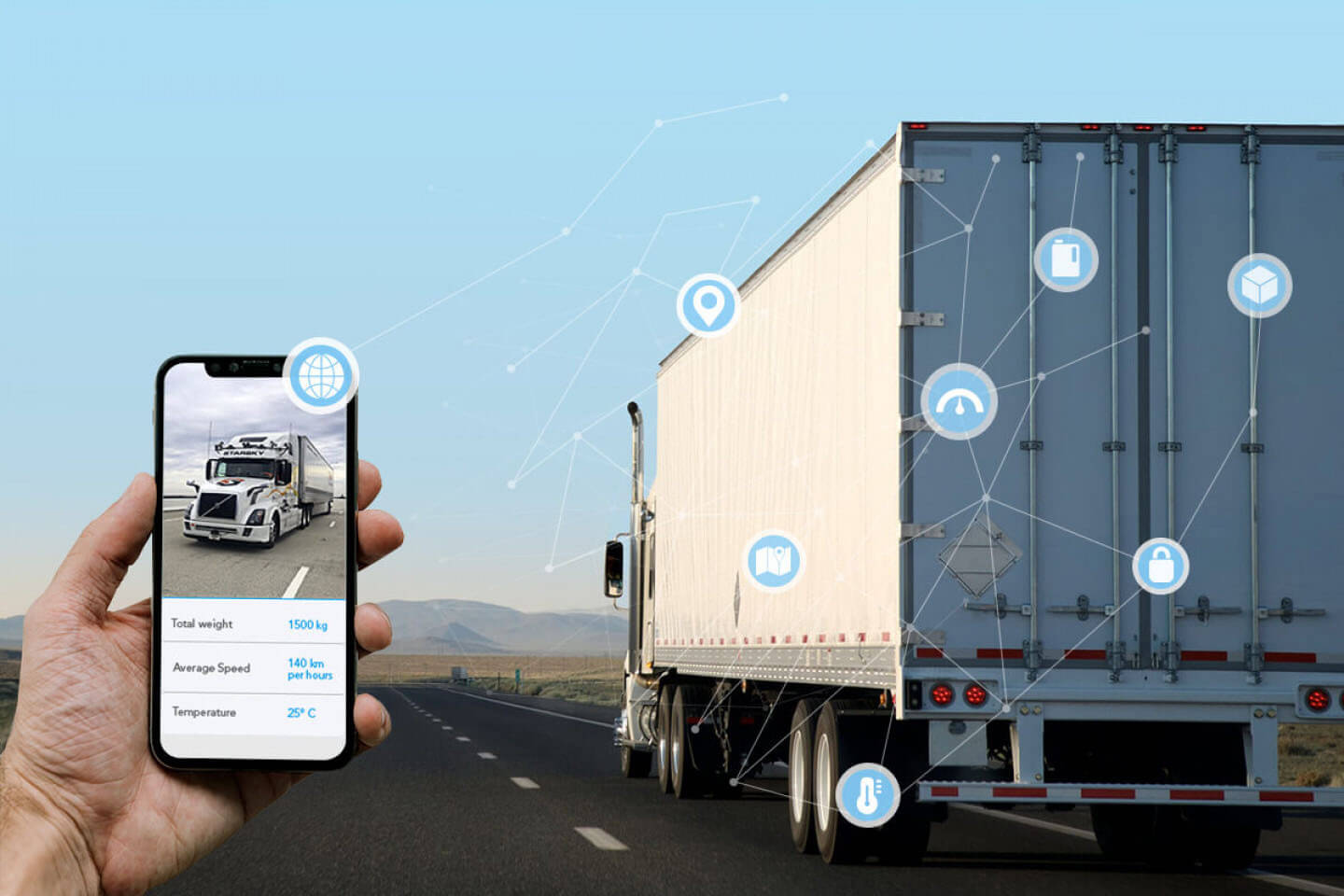
Energy-efficient: sensors that last for years
Reliability and a long service life go hand in hand with a well-thought-out energy design. To this end, network technologies have been developed in recent years that are specifically designed for energy-efficient, remotely deployed devices.
Low-power wide-area networks such as NB-IoT, LTE-M, and LoRaWAN are designed for long distances, small amounts of data, and minimal energy consumption. In addition, the sensor conserves energy by spending most of its time in sleep mode and waking up only periodically or when an event occurs. By filtering data right on the device and transmitting only relevant measurements, the number of transmissions decreases, thereby reducing power consumption.
This does involve a design trade-off, however. More frequent measurements and transmissions provide up-to-date data but come at the expense of battery life. The right balance depends on the intended use: a temperature violation in the cold chain must be reported more quickly than a routine location check. You don’t make that trade-off on a per-sensor basis, but as a conscious choice at the level of your entire data chain.
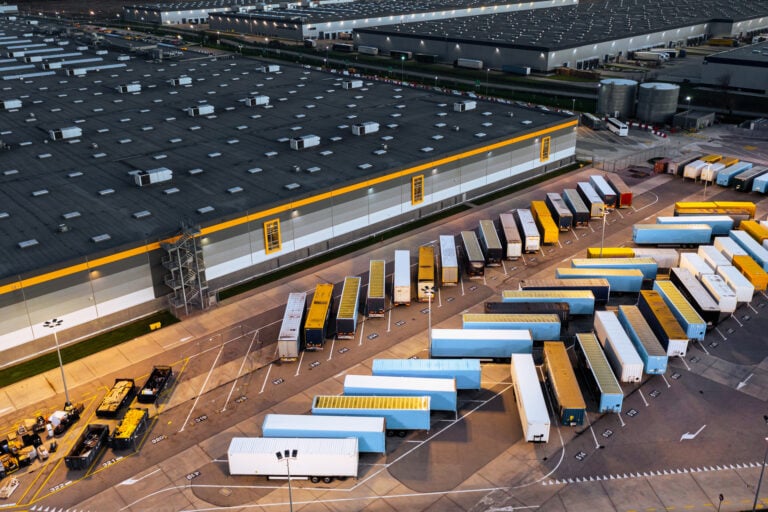
From raw sensor data to reliable decision-making information
A sensor that buffers data offline and transmits it in bursts produces data that looks different from a clean, continuous stream. Messages arrive with delays, sometimes out of order, sometimes duplicated, and rarely at fixed intervals. A platform built for ideal, real-time data streams will inevitably crash under these conditions.
A robust fleet management platform is therefore designed to handle this reality. It accepts data that arrives late or in random order and organizes it based on the timestamp at the source. It recognizes and removes duplicate messages. And in its analysis, it distinguishes between two fundamentally different situations: no data because there was nothing to report, or no data because the sensor was offline. That distinction is crucial for reliable alerts and for the confidence you can place in your dashboards.
On top of that, the platform must scale with your fleet and growing data volumes, maintain security across a large number of connected endpoints, and integrate seamlessly with your existing TMS, ERP, and planning systems. Equally important is effective device management. A robust fleet management platform must be able to securely register new sensors, monitor battery statuses, roll out firmware updates in a controlled manner, manage certificates, and provide continuous insight into the health of sensors in the field. Only then can you maintain control over the entire lifecycle of your IoT environment. Only then does raw sensor data become actionable insights.
Fleet management platform as the connecting link
The most common mistake is to treat sensors and the platform as separate purchases and assume that they will automatically connect to each other. In practice, the offline and low-power behavior of your logistics IoT sensors determines what your platform must be able to process, while your platform’s requirements also help determine how your sensors should ideally report. These are two sides of the same design.
Yet, ultimately, it all comes together in one place. No matter how intelligently your sensors buffer data or how efficiently they conserve energy, their data only becomes valuable when a robust platform converts that incoming, irregular, and sometimes incomplete data stream into reliable actionable insights. The platform is therefore the link that determines whether you can truly trust what your dashboards show.
For a C-level decision-maker, this is not an operational choice, but a strategic architectural decision. Those who design sensors and the platform together around the actual conditions in which the fleet operates will reap tangible benefits: fewer blind spots, lower maintenance and battery costs, and data that is reliable enough to inform strategic, tactical, and operational business decisions.

Do you also need a robust fleet management platform for your logistics IoT sensors?
A fleet management platform that delivers usable data even under challenging conditions isn’t built from disparate components. It requires a smart solution designed with the day-to-day realities of transportation in mind: fluctuating connectivity, limited power, and rapidly growing data volumes.
At NetRom Software, we’ve been offering custom software development for the transport and logistics. With our logistics IoT solutions, we design and build fleet management platforms that work with offline and low-power sensors, scale with any fleet, and integrate seamlessly with existing and new systems.
Curious about how a custom-built fleet management platform can provide your organization with reliable management insights? Contact us for a free consultation. We’d be happy to tell you how our experienced and motivated developers can support your organization in achieving your goals through smart, logistics-focused IoT solutions

CO₂ tracking for transportation companies: From mandatory reporting to lower operating costs

Developing (or having developed) fleet management software: from vision to scalable platform